
Hey there, fellow marketers and business owners! Have you noticed how the advertising world is practically spinning on its head these days? It feels like just yesterday we were talking about social media being the “next big thing,” and now, AI is completely rewriting the rulebook for ad agencies and campaign planning.
Honestly, from what I’ve witnessed, businesses that aren’t embracing artificial intelligence in their marketing strategies are quickly falling behind, missing out on incredible opportunities for precision targeting and unheard-of efficiency.
It’s not just about automating tasks anymore; we’re talking about a whole new level of predictive power and creative iteration that truly transforms how we connect with our audience.
I’ve personally seen firsthand how integrating AI can turn a good campaign into a phenomenal one, boosting engagement and ROI in ways we only dreamed of before.
So, how are ad agencies navigating this brave new world, and what does AI-driven planning really look like on the ground? Let’s dive in and explore exactly how these exciting changes are reshaping our industry.
Unlocking New Creative Horizons with Artificial Intelligence

Honestly, when I first heard about AI creeping into the creative departments of ad agencies, I had a mix of excitement and a tiny bit of apprehension. Would it stifle human ingenuity? Would campaigns feel… robotic? What I’ve seen firsthand, though, has been nothing short of transformative. Instead of replacing the human touch, AI is actually supercharging it, allowing creative teams to dream bigger and execute with unprecedented precision. It’s like having an incredibly powerful, tireless assistant that crunches data and generates insights in seconds, freeing up our human brains for what they do best: imagine, empathize, and innovate. This isn’t just about efficiency; it’s about unlocking new realms of possibility in how we tell stories and connect with people. I’ve personally witnessed agencies that used to struggle with creative block now brainstorming with a renewed vigor, thanks to AI providing fresh angles and surprising data points they might have missed.
AI as the Ultimate Creative Partner, Not a Replacement
The beauty of AI in a creative setting is its ability to take on the heavy lifting of repetitive tasks and data analysis. Think about it: sifting through mountains of consumer behavior data, identifying emerging trends, or even generating countless ad copy variations for A/B testing – these are all tasks that used to take days, sometimes weeks, of human effort. Now, AI can do it in a blink. This means our talented copywriters, art directors, and strategists can focus on crafting truly compelling narratives, refining emotional appeals, and ensuring brand consistency, rather than getting bogged down in grunt work. I’ve spoken with countless creatives who feel more empowered and less constrained, using AI to validate their instincts or explore avenues they wouldn’t have had the time for before. It’s truly a game-changer for fostering a more dynamic and innovative creative process.
Revolutionizing Content Creation and Personalization at Scale
One area where AI truly shines for creative teams is in content creation and hyper-personalization. Gone are the days of crafting one-size-fits-all messages and hoping they resonate with a broad audience. With AI, agencies can analyze individual preferences, past interactions, and even predicted future behaviors to generate highly tailored ad content. I’m talking about everything from dynamic ad copy that adapts to a user’s browsing history to personalized video snippets that speak directly to their expressed interests. This level of customization was once a distant dream, but AI makes it a reality, allowing brands to deliver messages that feel incredibly relevant and personal, rather than intrusive. The engagement rates I’ve seen on these AI-powered personalized campaigns are consistently higher, proving that when you speak directly to someone’s needs, they listen.
Predictive Analytics: Peering into the Future of Consumer Behavior
Remember the days when we’d spend hours poring over market research reports, trying to guess what consumers might want next? It felt a bit like throwing darts in the dark sometimes, even with the best data available. Well, buckle up, because predictive analytics, powered by AI, has completely revolutionized how we anticipate consumer behavior. This isn’t just about looking at what people *did* in the past; it’s about using sophisticated algorithms to forecast what they *will do* in the future. By analyzing vast datasets—everything from social media trends and search queries to purchasing patterns and even economic indicators—AI can identify subtle signals and predict shifts in demand, sentiment, and preferences. I’ve personally been blown away by the accuracy of some of these predictions, allowing agencies to get ahead of trends rather than chasing them, and creating campaigns that land with perfect timing and incredible relevance.
Unveiling Hidden Opportunities and Emerging Trends
What I find most exciting about AI-driven predictive analytics is its uncanny ability to uncover hidden opportunities. Sometimes, the next big thing isn’t immediately obvious; it’s a subtle pattern emerging from fragmented data points. AI, with its capacity to process and connect disparate pieces of information far beyond human capabilities, excels at spotting these nascent trends. This allows ad agencies to advise their clients on truly innovative strategies, helping them tap into underserved markets or position new products before the competition even knows what’s happening. I’ve seen brands pivot their entire messaging based on AI-generated insights, leading to phenomenal growth because they were able to anticipate a consumer need before it became mainstream. It’s like having a crystal ball, but one that’s built on solid data, not magic.
Optimizing Campaign Timing and Messaging for Maximum Impact
Beyond identifying trends, predictive analytics also empowers agencies to fine-tune the timing and messaging of their campaigns for maximum impact. Imagine knowing the optimal moment to launch a new product ad, or understanding exactly what kind of emotional appeal will resonate most strongly with a particular audience segment next quarter. AI can provide these insights, minimizing wasted ad spend and maximizing ROI. For example, it can predict when a certain demographic is most likely to be receptive to a particular type of message, or identify seasonal shifts in purchasing intent with incredible precision. I’ve personally managed campaigns where a slight tweak in timing, informed by AI, led to a significant boost in conversions. It takes the guesswork out of strategic decisions, allowing us to deploy resources where they’ll make the biggest difference.
Data-Driven Decisions: The Heartbeat of Modern Ad Agencies
In the past, marketing decisions often involved a significant amount of gut feeling, sprinkled with some historical data. While intuition still plays a role, AI has shifted the paradigm, making data-driven decision-making the absolute cornerstone of any successful ad agency. It’s no longer just about collecting data; it’s about making sense of it at a scale and speed that was previously unimaginable. From audience segmentation to media buying, every aspect of a campaign can now be informed by real-time insights, minimizing risk and maximizing efficiency. I remember agonizing over media placements, hoping we were hitting the right channels. Now, AI takes that uncertainty away, guiding us with hard evidence. It fundamentally changes how we approach strategy, moving from educated guesses to informed certainties, which is incredibly reassuring when client budgets are on the line.
Refining Audience Targeting with Unprecedented Accuracy
One of the most impactful ways AI drives data-driven decisions is through refining audience targeting. Forget broad demographic buckets; AI can create incredibly granular audience segments based on psychographics, behavioral patterns, online activities, and even expressed interests. This level of detail allows agencies to understand their target consumers not just as groups, but as individuals with unique motivations and needs. I’ve seen AI identify niche segments that traditional methods completely missed, opening up entirely new markets for clients. It’s like having a super-powered magnifying glass for your audience, revealing insights that allow for truly precise and effective targeting, ensuring your message reaches the people who are most likely to care.
Optimizing Media Spend and Channel Selection
Let’s be honest, media planning used to be a beast. Deciding where to allocate budget across countless platforms, trying to predict which channels would deliver the best ROI, was always a challenge. AI has streamlined this process dramatically. By continuously analyzing performance data across various channels – social media, search engines, display networks, video platforms – AI can dynamically optimize media spend in real-time. It identifies which channels are performing best for specific campaigns and audiences, and can even predict the incremental value of shifting budget from one platform to another. I’ve personally experienced campaigns where AI algorithms dynamically reallocated budget throughout the day, ensuring we were always getting the most bang for our buck and significantly improving our ad spend efficiency. It’s incredibly empowering to know that your budget is working as hard as possible, always in the right place at the right time.
| Aspect | Traditional Advertising Planning | AI-Driven Advertising Planning |
|---|---|---|
| Audience Targeting | Based on broad demographics, surveys, historical data, and intuition. Less granular and often leads to generalized messaging. | Highly granular segmentation using real-time behavioral data, psychographics, predictive analytics. Enables hyper-personalization. |
| Content Creation | Manual ideation, limited A/B testing, slower iteration cycle. Creative bias can influence outcomes significantly. | AI assists in generating variations, identifying high-performing elements, and optimizing copy/visuals based on predicted engagement. Faster iteration. |
| Media Buying | Manual negotiation, fixed budget allocation across channels based on past performance and estimations. Less flexibility for real-time adjustments. | Programmatic buying, dynamic budget allocation based on real-time performance and predictive ROI. Continuous optimization across channels. |
| Performance Analysis | Retrospective analysis, often delayed and labor-intensive. Limited ability to intervene during active campaigns. | Real-time tracking, immediate identification of underperforming elements, AI-driven recommendations for optimization during active campaigns. |
| Efficiency & ROI | Can be inefficient due to manual processes and reliance on past data. ROI often optimized post-campaign. | Significantly increased efficiency through automation and predictive capabilities. Real-time optimization drives higher ROI during campaigns. |
Seamless Workflow and Enhanced Collaboration for Agencies
When I think about the internal workings of an ad agency, efficiency and collaboration are always top of mind. The traditional agency model often involved numerous silos, manual hand-offs, and plenty of time spent coordinating instead of creating. AI is fundamentally changing this by automating mundane tasks and providing centralized insights, leading to a much more seamless workflow and enhanced collaboration across departments. It’s like having a universal translator and project manager all rolled into one, allowing different teams – from strategy to creative to media buying – to work together more harmoniously and effectively. I’ve seen agencies dramatically cut down on meeting times and email chains, simply because AI tools provide everyone with the same, up-to-date information and actionable insights, fostering a truly unified approach to campaign execution.
Automating Repetitive Tasks to Free Up Human Talent
Let’s be real, no one got into advertising to spend their days on mind-numbing, repetitive tasks. Yet, a surprising amount of agency work used to involve just that: data entry, report generation, basic ad variant creation, and so on. AI is a godsend in this regard. It can automate these tedious processes, freeing up valuable human talent to focus on strategic thinking, complex problem-solving, and relationship building. Imagine a media planner no longer spending hours manually pulling data from various platforms, but instead reviewing AI-generated reports that highlight key performance indicators and suggest optimizations. I’ve witnessed firsthand how this shift empowers employees, boosting morale and allowing them to contribute at a much higher, more creative level. It’s about letting humans be human, and machines do what they do best.
Centralized Insights and Cross-Functional Alignment
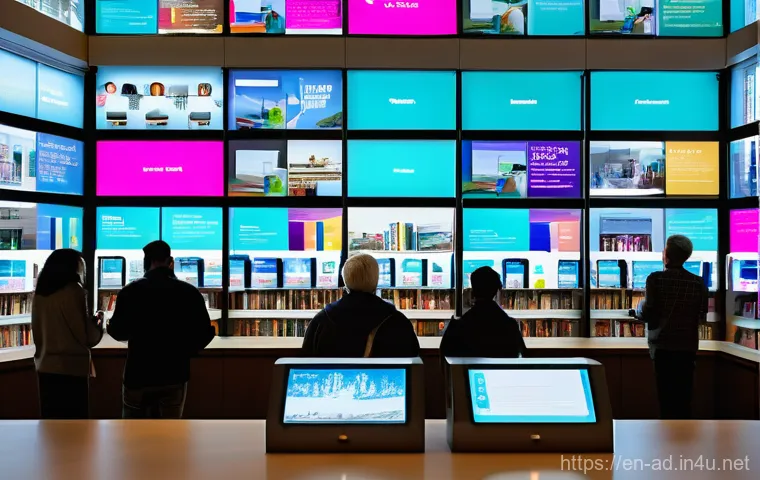
Another massive benefit of integrating AI into agency workflows is the creation of centralized insights. Instead of different teams working with fragmented data sets or relying on their own interpretations, AI platforms can consolidate all campaign data, audience insights, and performance metrics into a single, accessible hub. This ensures that everyone, from the account manager to the creative director, is working from the same source of truth. This common understanding fosters incredible cross-functional alignment. When the creative team understands exactly why certain ad copy is performing better based on real data, and the media buying team knows precisely which creatives are resonating, decision-making becomes faster, more informed, and much more cohesive. I’ve personally seen this reduce internal friction and drastically improve the speed at which campaigns can be optimized and adapted.
Future-Proofing Your Agency: Adapting to the AI-First Marketing Landscape
The pace of change in our industry is relentless, isn’t it? It feels like if you blink, you might miss the next big technological leap. For ad agencies, embracing AI isn’t just about gaining a competitive edge today; it’s absolutely crucial for future-proofing your business. The marketing landscape is rapidly becoming AI-first, and agencies that fail to adapt risk becoming obsolete. This means investing in new technologies, upskilling teams, and fundamentally rethinking traditional agency structures. It’s a journey, not a destination, but one that promises immense rewards for those willing to embark on it. I’ve seen some agencies hesitate, fearful of the unknown, but the ones who jump in with both feet are consistently the ones thriving, attracting top talent, and delivering cutting-edge results for their clients. It’s truly a sink-or-swim moment, and I wholeheartedly believe agencies need to learn to swim with AI.
Investing in AI Tools and Developing New Skill Sets
A key part of future-proofing involves smart investment. This isn’t just about buying the most expensive AI software; it’s about strategically integrating tools that genuinely enhance your agency’s capabilities, whether that’s for data analysis, creative generation, or media optimization. But technology alone isn’t enough. Agencies also need to invest heavily in their people, developing new skill sets that complement AI. This means training strategists to interpret AI insights, creatives to leverage AI for ideation, and media buyers to manage programmatic platforms. I’ve noticed a significant shift in job descriptions, with a greater emphasis on “AI literacy” and data interpretation. It’s about building a hybrid workforce where human ingenuity and AI efficiency work hand-in-hand to deliver exceptional value.
Rethinking Agency Models and Value Propositions
As AI handles more of the tactical execution and data crunching, the value proposition of an ad agency naturally evolves. It’s no longer just about execution; it’s about providing high-level strategic guidance, deep client understanding, and truly innovative problem-solving. Agencies need to rethink their models, moving towards more consultative roles where their human expertise in empathy, culture, and nuanced storytelling becomes even more critical. I believe this shift actually elevates the role of the agency, making it a more strategic partner rather than just a service provider. The agencies I see thriving are those that are redefining their offerings, focusing on what only humans can do – building relationships, understanding complex brand narratives, and navigating ethical considerations – while leveraging AI for everything else.
Navigating the Ethical Landscape of AI in Advertising
Okay, let’s get real for a moment. As exciting as AI is for advertising, we can’t ignore the ethical considerations that come with it. The power of predictive analytics and hyper-personalization is immense, and with great power comes great responsibility, right? From data privacy concerns to the potential for algorithmic bias and even questions around the authenticity of AI-generated content, navigating this ethical landscape is paramount for any agency that wants to build and maintain trust with both clients and consumers. It’s not just a legal box to tick; it’s about demonstrating genuine respect for individuals and upholding the integrity of our industry. I’ve been involved in countless discussions around these topics, and it’s clear that a proactive, thoughtful approach to AI ethics isn’t just good practice—it’s absolutely essential for long-term success and reputation.
Ensuring Data Privacy and Transparency in AI-Powered Campaigns
One of the biggest ethical tightropes we walk with AI is data privacy. Consumers are increasingly aware and concerned about how their personal data is collected, used, and protected. For ad agencies utilizing AI, this means being meticulously careful with data handling, adhering strictly to regulations like GDPR and CCPA, and, crucially, being transparent with clients about data sources and usage. I’ve always advocated for clear communication, explaining in plain language how AI is being used to target ads, and ensuring consent is always at the forefront. It’s not about hiding the “how”; it’s about building trust by showing that you respect consumer privacy and are using their data responsibly to enhance their experience, not exploit it. Transparency is key to maintaining consumer confidence in AI-driven advertising.
Addressing Algorithmic Bias and Promoting Inclusivity
Another critical ethical challenge is algorithmic bias. AI systems learn from the data they’re fed, and if that data reflects existing societal biases, the AI can inadvertently perpetuate or even amplify them in its targeting or content generation. This can lead to campaigns that exclude certain demographics, reinforce stereotypes, or simply miss out on connecting with diverse audiences. It’s a huge responsibility to actively work against this. Agencies must be vigilant in scrutinizing their data sources, regularly auditing AI algorithms for bias, and consciously designing campaigns that promote inclusivity. I’ve personally been involved in projects specifically aimed at diversifying data sets and training models to be more equitable, because I truly believe that inclusive advertising is not only ethically sound but also demonstrably more effective in today’s diverse marketplace.
글을 마치며
So, as we wrap things up, it’s clear that AI isn’t just a buzzword in the advertising world – it’s a profound, transformative force. What started as a cautious curiosity for many of us has evolved into an indispensable ally, pushing the boundaries of what’s creatively possible and bringing a new level of precision to our strategies.
It’s truly exciting to see how human ingenuity, coupled with AI’s incredible capabilities, is forging a future where campaigns are more impactful, more personalized, and frankly, more brilliant than ever before.
This journey of integration is ongoing, but one thing is certain: the agencies embracing this shift are the ones truly leading the charge, redefining excellence in our industry.
알아두면 쓸모 있는 정보
1. Start Small, Scale Smart: Don’t feel pressured to overhaul your entire workflow at once. Begin by integrating AI into one specific area, like ad copy optimization or audience analysis, and learn from there. Small wins build confidence and provide valuable insights for scaling your AI adoption effectively.
2. Focus on Upskilling Your Team: Technology is only as good as the people using it. Invest in training your creative and strategic teams to understand AI’s capabilities and how to best collaborate with these tools. This empowers them to ask the right questions and leverage AI for deeper insights.
3. Prioritize Data Governance and Ethics: Before diving deep, establish clear guidelines for data collection, usage, and privacy. Ethical AI use isn’t just about compliance; it’s about building trust with your audience. Regularly audit your AI models for bias to ensure inclusivity.
4. Embrace Experimentation and Iteration: The beauty of AI is its ability to process and learn quickly. Don’t be afraid to run numerous A/B tests, experiment with different AI-generated variations, and iterate based on performance data. This agile approach will lead to faster optimization and breakthroughs.
5. Cultivate a Human-AI Collaboration Mindset: View AI not as a competitor, but as a powerful co-pilot. Your unique human empathy, creativity, and strategic oversight are irreplaceable. AI enhances these qualities by handling the heavy lifting and providing data-driven perspectives, allowing you to focus on the truly innovative aspects.
중요 사항 정리
To sum it all up, the advertising landscape is evolving at warp speed, and AI is undeniably at the heart of this transformation. We’ve seen how it supercharges creativity by automating repetitive tasks, offers unparalleled precision through predictive analytics and hyper-personalization, and drives truly data-driven decisions that minimize risk and maximize ROI.
Furthermore, AI streamlines agency workflows, fostering seamless collaboration and freeing up human talent for higher-value work. However, this exciting future demands a conscious effort to navigate ethical considerations, ensuring data privacy and combating algorithmic bias.
Ultimately, integrating AI is about future-proofing your agency, investing in new skills, and rethinking your value proposition to thrive in this dynamic, AI-first marketing era.
It’s a journey of continuous learning, but one that promises incredible rewards for those willing to embrace its full potential.
Frequently Asked Questions (FAQ) 📖
Q: How exactly is
A: I rewriting the rules for ad agencies and marketing campaigns today? A1: Oh, it’s absolutely wild to see, truly! From my vantage point, AI isn’t just tweaking things; it’s fundamentally reshaping how we approach everything, from strategy to execution.
Think about it: before, we’d spend hours, days even, painstakingly segmenting audiences based on demographics and a few behavioral guesses. Now? AI algorithms can sift through colossal amounts of data in seconds, identifying hyper-specific micro-segments with incredible accuracy.
It’s like having a superpower that lets you truly know your audience before you even launch a single ad. I’ve personally watched campaigns that traditionally required weeks of manual optimization hit peak performance in just a few days because AI was constantly learning and adjusting bids, creatives, and placements in real-time.
It’s not just about efficiency; it’s about a level of predictive insight into consumer behavior and market trends that was pure science fiction just a few years ago.
This means agencies aren’t just reacting anymore; we’re anticipating and getting ahead of the curve, leading to campaigns that don’t just reach people, but genuinely resonate.
Q: What are the biggest advantages businesses are seeing when they embrace
A: I in their marketing strategies? A2: Honestly, the advantages are so compelling that it’s hard to imagine operating without AI now. For starters, the ROI boost is often astonishing.
I’ve seen firsthand how AI-powered tools can optimize ad spend so precisely that you get significantly more bang for your buck. We’re talking about reducing wasted ad impressions and reallocating budgets to the channels and creative that are actually performing.
Beyond just cost savings, the engagement rates soar because AI enables such personalized messaging. It helps us craft content and ad copy that speaks directly to an individual’s needs and preferences, often before they even consciously realize them.
It’s not just about showing the right ad; it’s about showing the perfect ad at the perfect time. This leads to higher click-through rates, deeper customer relationships, and ultimately, a much stronger bottom line.
Plus, the speed at which you can test new ideas and iterate on campaigns is just mind-blowing. It allows businesses to be incredibly agile and responsive to market shifts, which is an invaluable competitive edge in today’s fast-paced world.
Q: For ad agencies looking to adopt
A: I, what does the implementation process typically involve, and is it a steep learning curve? A3: That’s a fantastic question, and one I get asked a lot!
From my experience, while it might seem daunting at first, the implementation process is becoming increasingly streamlined. It usually starts with an audit of existing data and marketing goals to identify where AI can deliver the most immediate impact.
Then, it’s about integrating AI tools – whether they’re for audience segmentation, predictive analytics, content generation, or ad optimization – into your current workflow.
The key isn’t to replace your human talent but to empower them. I’ve found that the biggest ‘learning curve’ isn’t necessarily mastering the tech, but rather learning to trust the AI and understand how to best interpret its insights to make strategic decisions.
It’s a collaborative dance between human creativity and AI’s analytical power. Many platforms are now incredibly user-friendly, designed for marketers, not just data scientists.
My advice? Start small, experiment with one or two key areas, and don’t be afraid to learn as you go. The early wins you’ll see will be incredibly motivating and pave the way for broader adoption across your agency.